Elevated Prose
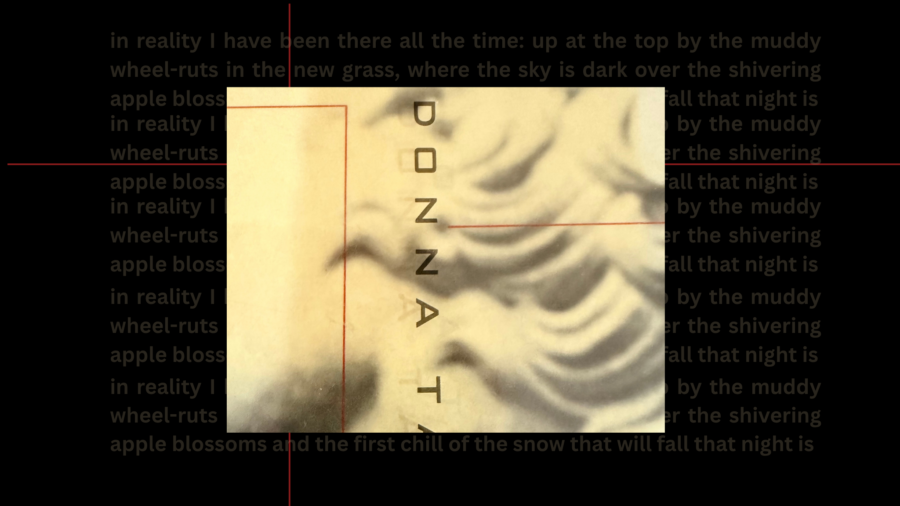
There’s writing and then there’s literary brilliance. The latter seems so rare that when I happen upon it I reread the sentence multiple times and then contemplate it with the kind of indulgence only an addict can appreciate. The Secret History by Donna Tartt is one such literary work.
I’m going to fall gleefully into this rabbit hole and explore all the nerdy grammar and language candy I can find down here, and there’s a lot to unwrap.
Every sentence I share here is in the Prologue, so there are no spoilers. I first read this book in the Fall of 2021. It is one of my favorites. It breaks countless rules, even starting off with a murder and who did it on the first page.
The Written Structure of a Thought
Let’s breakdown a few of her sentences and see if we can’t understand why the sentence is brilliant when it breaks quite a few ‘good writing’ rules.
Most writers are instructed to write using direct language, no extra unnecessary words or flowery descriptions. Now this is good instruction, but knowing what words are which, well, that’s the whole rhythm of cadence. Keep in mind, as a gesture of respect for all hard-won literary works, what takes me sixty seconds to dumb down took the author perhaps hours or days to carefully and painstakingly craft her sentence. I’ve got the easy part today and still it has taken me over five days and twenty-five hours to write this blog. Writing is difficult (period)
I’ll edit down and re-sentence first and reveal her original sentence afterward.
My re-sentencing: But going through it was one thing; getting away with it has proven difficult, even though I thought I’d left the incident in the past, I’m no longer sure.
This is an acceptable sentence, clean. It’s boring and doesn’t have much if any cadence, there are no fluff words. It gets the point across.
Now let’s look at Tartt’s sentence: But walking through it all was one thing; walking away, unfortunately, has proved to be quite another, and though once I thought I had left that ravine forever on an April afternoon long ago, now I am not so sure.
>>>
Her sentence is oil on bread. Let’s examine all the rules she broke: adding superfluous words like all and so, driving the sentence forward instead of just making it three succinct but separate sentences with periods. It’s close to a run on sentence, except that she understands English grammar + rhythm, she’s comfortable with letting the words play in their ink. That’s cadence my friends, and it’s glorious.
”…and though once I thought I had left that ravine forever on an April afternoon long ago,” is wholly unnecessary but it is the beauty of the entire sentence, the sudden elevation of a deeper note that resounds. It shifts the awareness of the reader into a delightful rhythm which carries a sense of melancholy. The writing isn’t direct – I can’t forget – no, instead it envelopes the reader in the mystery of time and place somewhere lingering in the past. Tartt made room for this sentence to play, to dance, to have its space. Reread it again and see how it’s far more than a sentence telling a thought. I can devour books written like this.
The Secret History was so different from the rank and file of literary novels being written in the late 1980s that I was given many confident predictions of its failure – I was told to shorten it drastically, that the male narrator was a mistake, that the tone was too elegiac and not contemporary enough – I’m glad I didn’t listen and went ahead and wrote the book I wanted to write.
Donna Tartt, The Queen’s Reading Room, Interview Excerpt, December 2023
The Written Structure of a Feeling
Let’s take a look at another of her sentences. Again, I’ll write a direct, perfectly acceptable version first.
My re-sentencing: Life is quiet now that the searchers have gone. I’ve come to realize I can’t make myself forget the whole ordeal, being there on the mountain, the muddy tracks we left, the trees blowing in the wind and how cold the air was — it would soon snow.
My re-sentencing gives us a place and some details that the reader can visualize. But did you feel any emotion? Did you get a sense of foreshadowing or longing or any feeling at all? Probably not, though I could have added, ‘…it would soon snow, and it made me uneasy.’
The problem is the ‘telling’ with no showing of the moment. I’m giving you people/place/thing and how I feel. My writing has excluded, indeed pinned, the reader to the outside as an observer of unfolding events. You don’t feel hectic, there’s no sense of anxiety or aloneness.
Now let’s look at how Donna Tartt wrote it:
Tartt’s Finished Prose: Now the searchers have departed, and life has grown quiet around me, I’ve come to realize that while for years I might have imagined myself to be somewhere else, in reality I have been there all the time: up at the top by the muddy wheel-ruts in the new grass, where the sky is dark over the shivering apple blossoms and the first chill of the snow that will fall that night is already in the air.
>>>
I close my eyes when I read sentences like this and I bask in their glory. Am I gushing? My bad….
Look at the length of that sentence! It’s going to tank my SEO for sure being comprised of 77 words. It’s lovely. Long sentences are an amateur’s run-on nightmare but in this case, it simply prolongs the joy of a thing. Notice how Tartt has crafted a sentence that doesn’t tell what’s happening and instead brings an entire experience of foreshadowing, loss of innocence, and dread. It quietly rests in a moment of calm that contains an anxious scene, a chaotic memory. She does this not by describing what the character is feeling, but by using the trees to express it.
‘…the sky is dark over the shivering apple blossoms…’
I can’t tell you how much more powerful this is than, ‘…the cold made me shiver that night along with what we did to Bunny…’
My sentence ignores the play on language because it isn’t necessary to tell a story.
But God, how it’s so necessary to write a brilliant one.
Moreover, novels like no other medium teach us about time: how life works in time and how we evolve, or don’t, by the choices we make. What’s the good life? What are our blind spots? What matters most? The answers are different for everybody and can change drastically over the span of a life.
Donna Tartt, The Queen’s Reading Room, Interview Excerpt, December 2023
Unwrapping More Candy: Poetic Elements Elevate the Prose
I’m enjoying this free-fall down the rabbit hole immensely, I hope you are too. I’ll touch upon another subtle, poetic aspect of this sentence: “up at the top by the muddy wheel-ruts in the new grass” is poetic, perfectly balanced. These sentences are constructed and hewn through both a gift and a painstaking wrestling with language and rhythm. So the rhyme is subtle in ‘up, top, and mud, rut’ while ‘ruts’ and ‘grass’ hard close like percussion beats and the latter finishes the notes with muddy, wheel and new’. The way the mouth must shape to pronounce ‘whe’ of wheel is exactly reverse to say ‘new’. This cadence continues with ‘s’ percussion notes all the way through the part I didn’t include.
(Read the book:)
This is what I’m talking about. This is why there are over 100 million books in the world and less than a few hundred literary artists that know how to elevate common language into art and spirit.
One More Thematic Resonance, (I Cannot Stop Myself…)
“…I took one glance back through the saplings that leapt to close the path behind me.”
This section of prose frames the previous foreshadowing paragraph of the chaotic, manic event. With the character’s glance back, which in itself denotes a sense of fear of what is behind (Bunny at the bottom of the ravine) and what might catch up to him, the saplings leaping to close the view behind him symbolize doors to the past that are closing and cannot be open to change again.
The sentence is crafted to haunt us. The looking back plants us in the character’s own sense of aloneness, the past is closing in around him – while for years I might have imagined myself to be somewhere else – there’s no escaping it. This is that sudden elevation of the deeper note again, and what my direct and acceptable sentences completely fail to do. The visualization of, through the saplings that leapt to close behind me, is the character’s own symbolic will to close off a memory he is unable to change all these years after leaving that ravine forever on an April afternoon long ago….
I love literary rebels.
We find all these sentences in the page and a half Prologue, before the First Chapter even begins. Just wow~
Donna Tartt, Her Writing and God
“In a world without God, the only way we can see actions and their complex consequences played out in the fullness of time is through the novel.”
“Faith is vital in the process of making my work and in the reasons I am driven to make it.”
Donna Tartt
If you aren’t aware, Donna Tartt is a Roman Catholic convert. I don’t know much more than that as she’s quite private. It’s unknown if she’s practicing or if Catholicism is just the religion she relates to the most and so converted.
The world has changed immensely since the last book Tartt released in 2014. The internet exploded, covid, AI, political havoc, war. I do appreciate that she seems to have no online presence anywhere. I admire that actually. It’s sophisticated and leaves us with a sense of mystery about her.
Scholars say of her work that it is Christ-haunted. Indeed He is the Spirit that elevates all things, through Whom all things are made. The Spirit who calls to us all, as deep calls unto deep.
An Upcoming Science Fiction Novel, Did I Dream It Up?
I recall a 2014 interview where Tartt mentioned her next book would have Science Fiction elements. It must have been a dream because I cannot find that anywhere now. I personally hope that’s what she’s working on. Most of her books are around a decade apart but nothing is set in stone. It’s been nearly thirteen years now since her last book, The Goldfinch. I’m looking forward to whatever she and the Holy Spirit put her pen to next.
If people still view books as dangerous enough to be banned, it’s for this reason: because it’s possible to read a book and at the end of the book to be literally a different person.
Donna Tartt